

The Critical Role of Bridge Hoisting Baskets. The technology for connecting bridge hoisting baskets with welds plays a pivotal role in the construction of cross-sea bridges. It not only ensures construction safety and efficiency but also provides robust assurance for the overall stability and service life of the bridge. With continuous technological advancements, we can confidently expect these technologies to play an even more significant role in future bridge projects, creating further engineering marvels for humanity.
In the grand panorama of modern bridge construction, bridge construction hoists and weld joint technologies undoubtedly play a pivotal role. Particularly in building transatlantic bridges—engineering marvels of human achievement—they not only demonstrate technological prowess but also ensure construction safety and efficiency. This article delves into the critical function of bridge construction hoists during bottom-level work on transatlantic bridges, as well as the vital importance of weld joints in the assembly of steel box girder
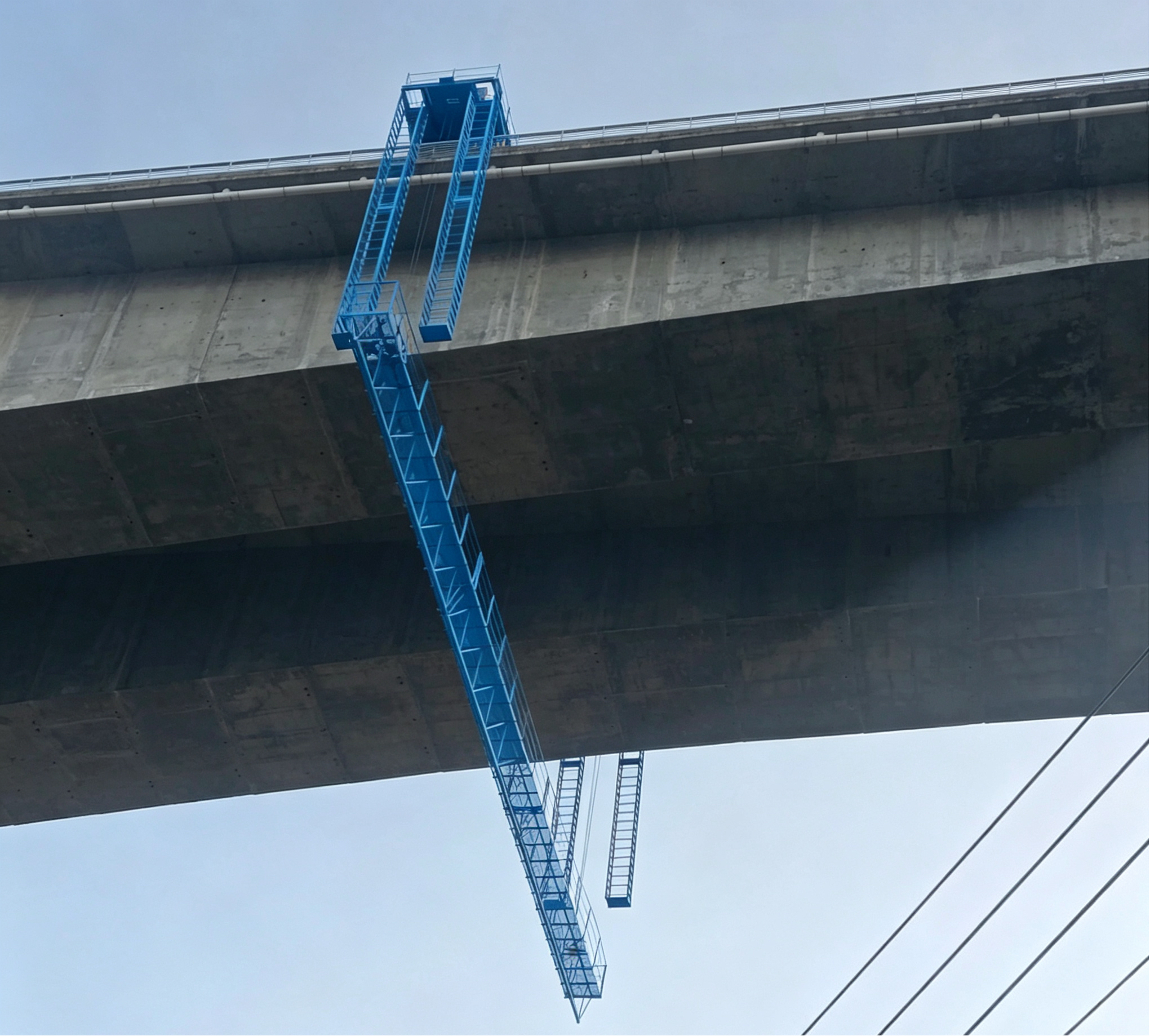
Bridge Construction Hoists: The “Guardians” Under Sea Bridges. As vital links connecting islands and cities and driving regional economic development, sea bridges present undeniable challenges in construction with stringent technical requirements. Beneath these massive structures, bridge construction hoists serve as indispensable “guardians” for workers. These specialized work platforms suspended beneath the bridges not only enable maintenance personnel to safely access the bridge deck for tasks such as crack repair, steel reinforcement rust removal, and coating maintenance, but also play a crucial role during the initial stages of bridge construction.
During the construction of cross-sea bridges, bridge foundation work often faces challenging and variable marine conditions, including interference from natural factors such as strong winds, massive waves, and tidal forces. Traditional construction methods struggle to ensure both worker safety and operational efficiency. The introduction of bridge construction hoisting baskets has effectively addressed this challenge. Featuring a modular design, these baskets can be flexibly adjusted in size to accommodate elevated bridges of various shapes and dimensions. Equipped with hydraulic lifting systems, safety protection devices, and intelligent monitoring systems, they ensure comprehensive safety during operations. Furthermore, with advancements in bridge construction technology, maintenance hoisting baskets continue to evolve. Future intelligent maintenance baskets will incorporate AI detection systems capable of automatically identifying structural defects and precisely locating repair areas, thereby enhancing bridge maintenance efficiency and safeguarding urban traffic safety.
During construction beneath the cross-sea bridge, the use of bridge hoists extends beyond maintenance tasks. They provide workers with a stable working platform for conducting bridge inspections, cleaning, and maintenance operations. Workers can stand on these platforms to perform close-range visual inspections of components such as beams, piers, abutments, and bearings, enabling early detection of potential safety hazards. Additionally, hoists facilitate the washing and wiping of elements like beams, railings, and impact walls, removing surface contaminants, debris, and dust to maintain the bridge’s cleanliness and aesthetic appearance.
Welded joints: the “steel bond” for the closure and butt jointing of steel box girders. If the construction hoists are the “guardians” of cross-sea bridges, then welded joint technology serves as the “steel bond” during the closure and butt jointing process of steel box girders. In cross-sea bridge construction, steel box girders constitute one of the primary load-bearing structures, and the precision and quality of their closure and butt jointing directly determine the overall stability and service life of the bridge. Welded joint technology is therefore a critical means for achieving this essential requirement.
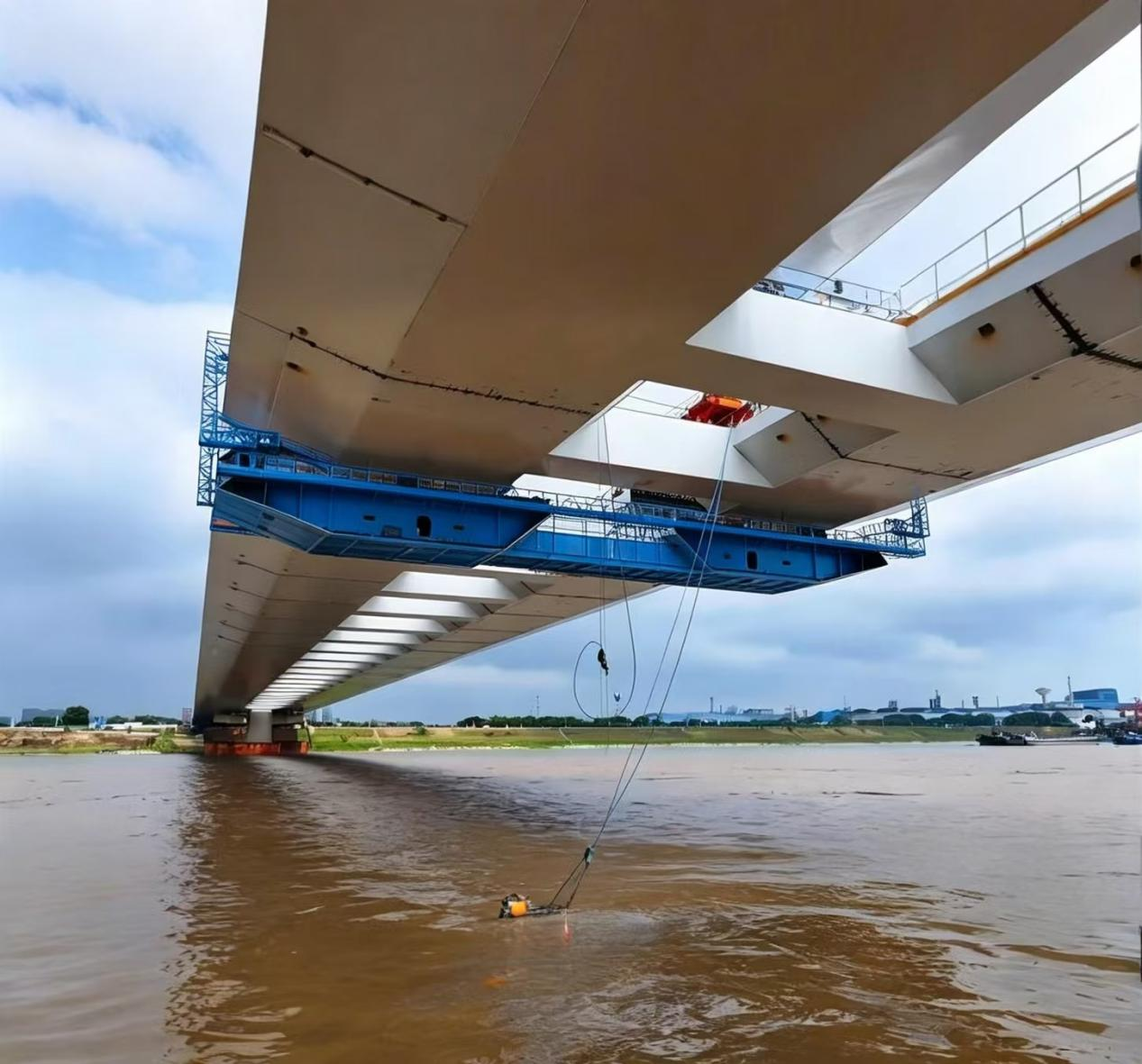
Welding joins are formed by locally melting the welding rod and workpiece through heat generated by an electric arc, which then cools to create a weld seam that connects the components. This method offers advantages such as simple construction, ease of fabrication, high joint stiffness, and excellent sealing performance. During the joining process of steel box girders, welding technology ensures a robust and reliable connection between the two girders, enabling them to withstand significant loads without fracture or deformation.
However, welding joint technology is not without its limitations. High welding temperatures can make the steel near the weld brittle, leading to residual stresses and deformation that compromise structural performance. Therefore, during the assembly of steel box girders, strict control over welding parameters—including current, voltage, and speed—is essential to ensure weld quality. Additionally, rigorous inspection and testing methods such as ultrasonic testing and radiographic testing must be employed to identify potential defects and enable timely repairs.
During the closure and butt jointing process of steel box girders, in addition to welding techniques, factors such as closure sequence, temperature control, and manufacturing procedures must be considered. These factors significantly influence the structural stress distribution and alignment accuracy of the girder. Therefore, detailed calculations and simulation analyses should be conducted prior to jointing to determine the optimal closure strategy. Throughout the process, real-time monitoring of girder deformation and stress conditions is essential for timely adjustments to construction parameters, ensuring precise and high-quality jointing results.
The Synergistic Role of Bridge Construction Hoists and Welded Connections In the construction of cross-sea bridges, the integration of bridge construction hoists and welded connections is not an isolated concept but a coordinated system that ensures smooth project progress. During foundation work, hoists provide workers with stable platforms for safe and efficient operations, while welding techniques guarantee precise alignment and quality in steel box girder assembly, significantly enhancing structural stability and service life. Furthermore, continuous technological advancements have driven innovations in these systems: intelligent maintenance hoists improve repair efficiency and accuracy, while new welding materials and techniques elevate connection reliability. These developments not only propel progress in cross-sea bridge engineering but also contribute substantially to transportation infrastructure. In summary, hoist-welded connection technology plays a pivotal role in bridge construction by ensuring safety, efficiency, and long-term durability. With ongoing technological advancements, these solutions are poised to play even greater importance in future bridge projects, creating remarkable achievements for modern transportation systems.